01
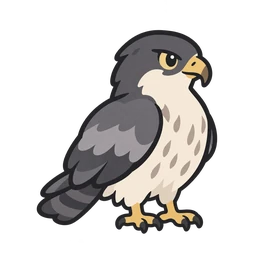
Who is the Hype Hawk?
The Hype Hawk (QMFS) is a quick, story-first investor who spots where the world is heading and buys once the stock starts to agree. Hawks put real money behind a few big ideas, follow the news closely, and usually hold a trade for weeks rather than years.
Long before a new technology shows up on the evening news, a Hawk has usually read several threads about it and picked the company they think comes out ahead. Friends sometimes text a Hawk before they buy anything, because the Hawk always seems to know what people will be talking about in six months.
What surprises people is that Hawks don’t buy the minute they read about something. They wait for the stock to start climbing, because a rising price tells them other people are catching on. That sets up the central puzzle of the type: the business story may take years to play out, but the trade depends on what happens in the next few weeks.
The story comes first
Ask a Hawk why they own a stock and you’ll get a story, usually a good one. They can explain in a sentence what the company is building and why it matters right now, and they’ll happily keep going if you let them.
That gift makes Hawks good at finding ideas early. It also means a great pitch can carry them right past the numbers, and some of the most exciting companies never actually make money.
Waiting for the price to agree
A Hawk with a new idea doesn’t rush in. They put the stock on a list and wait for the price to start moving their way. Holding out for a dip on a hot stock feels to them like waiting for a bus that has already left.
Once the stock starts climbing, though, Hawks move fast and buy a real position instead of a small test. The catch is that by the time a story is everywhere, much of the gain may already be in the price.
Big bets on a few ideas
Hawks would rather own four stocks they believe in than twenty they feel lukewarm about. One right call can make their whole year, and they know it.
The same focus means a bad month can really hurt. An account built on a few hot stocks can drop sharply in a couple of weeks. Hawks handle that much better when they’ve decided ahead of time what they’ll do.
02
Strengths and weaknesses
Strengths
Early to big trendsHawks often find the next big theme months before it reaches the headlines. They read widely and notice which new products people are actually starting to use.
DecisiveOnce a story clicks and the stock starts moving, a Hawk acts instead of waiting for one more sign. That lets them catch an idea while it’s still unfolding, not after everyone agrees on it.
Easy to explainA Hawk can tell anyone why they own each stock in a sentence or two. A reason that clear is also easy to check later, as long as they write it down.
Big upsideWith a few concentrated bets, one good call can change the whole year. Hawks accept the bumps that come with that, and in strong markets the bumps are often worth it.
Calm with big swingsSharp price moves don’t scare a Hawk off a good idea. A drop of 10% in a week that would send other investors running is, for many Hawks, just a normal Tuesday.
Curious about the businessUnlike traders who only watch the chart, Hawks want to know what a company makes and who buys it. That curiosity gives them much more to go on than a price move alone.
Weaknesses
Falling for the storyA great pitch can make a Hawk skip the numbers entirely. Some exciting companies never turn a profit, and a Hawk who never checks whether sales are growing may find that out late.
Mistaking buzz for proofWhen everyone is talking about the same company, it can feel like the evidence keeps piling up. Often it’s dozens of people reacting to one announcement, which adds a lot of noise and very little new information.
Buying near the topBy the time a story is everywhere, the early buyers may be getting ready to sell. A Hawk who waits for the whole world to agree can end up buying from the people who got there first.
Turning trades into holdsWhen a short trade goes against them, Hawks can talk themselves into holding for years because they still love the story. That is really a new decision, and it deserves a fresh look rather than a quietly moved deadline.
Big dropsHot stocks tend to fall the most when the market gets nervous. With only a few of them in the account, a Hawk can give back months of gains in a matter of days.
Always a new themeThere’s always another story, and jumping to each one can leave a Hawk with a pile of half-finished bets. Some of those old positions sit in the account long after the Hawk stopped paying attention to them.
03
In every market
In a sharp decline
The hot stocks fall first
Crashes hit Hawks hard, because the most exciting stocks usually fall the most when the market gets scared. A Hawk’s first instinct is to check whether the story still holds, and it usually does, which makes selling feel wrong.
That’s exactly when a sell line set ahead of time helps. A story that still holds up doesn’t mean the trade does, and a Hawk can always buy back in once the price starts climbing again. Writing down which part changed, the story or the timing, makes the next trade easier to judge.
In a strong rally
Everyone wants their picks
This is the Hawk’s market. Their stories are working and their stocks are climbing, so people at work suddenly want to know what they’re buying next.
The risk is that confidence grows faster than the evidence does. A good month doesn’t prove the story, and a hyped stock can give back months of gains in a few days. Hawks do best when they keep their sell lines in place and ask what still has to happen for today’s price to make sense.
In a quiet market
Restless and looking for action
Quiet markets make Hawks restless. Nothing is moving and the stories are on pause, while a stock they love drifts sideways for weeks even as the company keeps putting out good news.
The temptation is to force a trade, or to keep finding one new event after another as a reason to hold on. Quiet stretches are usually better for researching the next idea than for buying it. If a trade now needs a longer time frame, it helps to say so plainly and treat it as a real change.
04
Day to day
How they research
A Hawk’s research starts with the news and with the people who talk about what’s coming next. Most have a few themes they care about and a short list of favorite companies in each one. When a story clicks, they read what the company has promised and look for signs that customers are really buying. Then they watch the price and wait for it to move.
How they talk about stocks
Hawks are fun to talk stocks with, because they get excited and explain things well. Ask about any new product announced this week and a Hawk will already have an opinion about which company wins.
Their friends sometimes tease them for having a new favorite every few months. Hawks may find their more careful friends slow to see what’s happening, though those friends are often the ones who ask whether the company makes any money.
How they handle losses
A Hawk takes a loss hardest when they still believe in the story. Selling feels like admitting the idea was wrong, even when only the timing was.
Learning to keep those two apart is one of the most important skills for this type. The story can be right while the trade is wrong, and a Hawk who sells on schedule can always come back to the idea later at a better moment.
05
With other types

Sprinters · QMFN
Kindred spirit
The Breakout Cheetah is just as fast and also keeps only a few stocks, but it reads the chart instead of the headlines. Its habit of naming a clear, measurable reason to buy can help a Hawk find the part of its timing that can actually be checked.

Collectors · PVFS
Friendly challenger
The Clever Fox loves new businesses as much as a Hawk does, but it waits for a lower price and holds for years. It’s a good reminder that the same story is often cheaper when nobody is talking about it.

Climbers · PMFS
Patient twin
The Future Giraffe also buys strong companies with a big story behind them, but it gives them years to prove it. Comparing a Hawk’s short trade with the Giraffe’s long hold shows whether the plan and the story really fit the same time frame.
06
Growing as a Hawk
- 1
Write two cases, not one
Before you buy, explain the business and the trade separately:
- Business
What is changing, and why does this company in particular gain from it?
- Trade
Why buy now, at this price, for the time you plan to hold?
- Exit
What would make you sell, even if you still like the story?
If your trade case only repeats your business case, you’ve found the gap to look into. A good story can be a reason to research a stock, but the trade needs its own reason.
- 2
Argue against your favorite idea
Write down how someone could understand the same product just as well and still pass on the stock. Maybe they doubt this company will be the one that gains, or they think the price already expects too much.
Use the strongest objection you can think of, because a weak one only makes you feel better about the idea. Then write down what news would tell you which of you is right.
- 3
Check how your reasons changed
After a trade ends, compare your final explanation with what you wrote before you bought. Ask:
- Did the event you were waiting for happen, or did you give it more time?
- Did you check at least one number, like whether sales were growing?
- Did you add money because you learned something new, or because the position made you uneasy?
- Did you sell where you planned, or did the story talk you out of it?
Changes you made for a good reason are fine. The ones that crept in without a decision are the ones to watch for next time.
07
Strategies that fit
Hawks tend to like theme strategies, buying the leaders of a new technology once their prices start climbing, or holding a few growth stocks with a story behind them. They all start with an idea the Hawk believes in and end when the price stops agreeing.
Whichever one appeals to you, remember that a story can guide your research but can’t tell you when to buy, how much to put in, or when to sell. Those need rules of their own, and keeping up with the news takes time, so count that in from the start.
08
The Hawk in the long run
Hawks are often the first in their circle to see what’s coming, and that’s a real gift. Over years, though, the Hawks who do well are the ones who learned to sell a trade on schedule while still believing in the story behind it.
Growing as a Hawk doesn’t mean caring less about stories. It means writing down what the business has to do and what the stock has to do, and noticing when those two stop lining up.
“Think of a stock you bought for its story. What did you expect the company to do, what did you expect the stock to do, and did you give them the same deadline?
Curious how your style would actually do? Describe its rules in Alphaground and let an agent follow them with practice money, so you can watch every decision it makes.
16 Investor Types describes the preferences you report in the test, not your skill. Nothing here is investment advice.
All 16 types
Take the test